
Transfigured for Mission

This current edition of the Catholic Standard comes on the heels of Vocations Awareness Week, a time when the Church in Australia especially prays that men and women will hear the call of Christ and have the courage to answer it.
It also happens that during Vocations’ week I was slated to speak with some of our young adults at one of their pub nights. The title I was given is Transfiguration and Transformation, which was difficult but appropriate since we celebrate the Feast of the Transfiguration on 6 August.
Those are big words. Interestingly, though, they are not words which occur very often in the New Testament.
The word “transfigured” appears only in the accounts of the Transfiguration itself. St Matthew tells us that Jesus “was transfigured before them: his face shone like the sun and his clothes became as white as the light” (Mt 17:2). St Mark uses the same word (Mk 9:2).
St Paul, meanwhile, gives us the great summons to transformation: “Do not model yourselves on the behaviour of the world around you, but let your behaviour change, modelled by your new mind” (Rom 12:2). Other translations render that last phrase, “be transformed by the renewal of your mind.”
The words may be rare. The reality is everywhere.
To encounter Jesus Christ is to be changed. Peter, James, and John went up the mountain with Jesus and saw him differently. In the light which shone from his face, they began to see something of who he truly was. Yet the Transfiguration was not given so that they could remain on the mountain. Peter wanted to build three tents and stay there. Jesus led them back down.
Christian vocation always works like that. Christ calls us to himself so that he can send us out.
We see this beautifully in the Gospel of the feeding of the crowd that we heard recently. Jesus would not turn hungry people away. Nor did he simply perform the miracle while the disciples stood as spectators. He drew them into his mission.
“They do not need to go: give them something to eat yourselves” (Mt 14:16).
The disciples knew immediately that they did not have enough: just five loaves and two fish. Yet Jesus took what they had. He blessed it. He broke it. Then, significantly, he gave the loaves to the disciples, and the disciples gave them to the crowds.
That is vocation.
The Lord could have fed the crowd without them. Instead, he chose to involve them. He placed his gifts into their hands and sent them among the people.
Christ still does that.
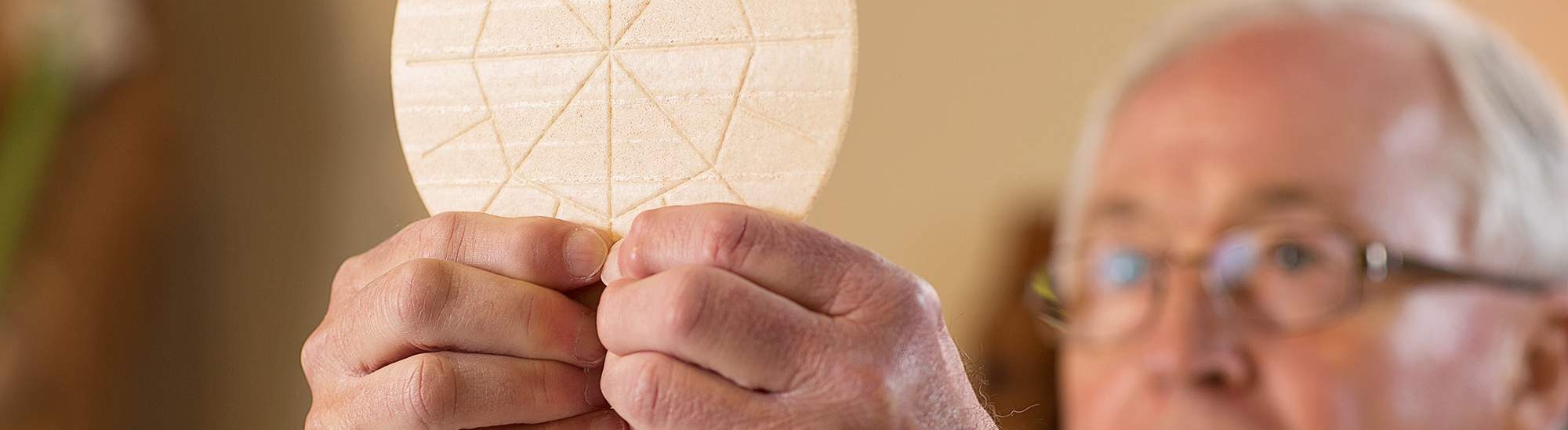
He calls priests to take the Bread of Life into their hands and feed his people. He calls religious women and men to give themselves with an undivided heart in prayer, education, healthcare, service to the poor and missionary work. He calls married couples to make their homes places where love becomes faithful and life-giving. He calls young people (and not so young people) to ask a question which our culture does not often encourage them to ask: Lord, what do you want me to do with my life?
That question matters enormously for us in Tasmania.
We need Tasmanian men willing to consider priesthood. We need women and men willing to consider religious life. We need Catholic marriages alive with faith. We need teachers, doctors, nurses, lawyers, tradespeople, and public servants whose encounter with Christ transforms the way they live and serve.
A vocation is not principally about finding something that will make me happy. It begins with allowing Christ to show me the true purpose of my life.
At the funeral of Cardinal Francis George of Chicago in 2015, Archbishop Peter Sartain recalled something Cardinal George had once said spontaneously to a gathering of young adults at the end of Mass. Sartain said the words had remained with him ever since:
“The only thing we take with us when we die is what we have given away.”
There is Vocations Awareness Week in one sentence.
The world tells us to build a life by accumulating: qualifications, experiences, possessions, influence, security. Jesus Christ points in another direction. The grain of wheat bears fruit by falling into the earth. The loaves feed the crowd by being broken and given. The disciples discover who they are when they allow themselves to be sent.
And on the mountain of the Transfiguration, the Father said: “This is my Son, the Beloved; he enjoys my favour. Listen to him” (Mt 17:5).
This is where every vocation begins.
Listen to him.
Then allow him to transform you.
Do not be afraid to give your love and life away.
Warmest greetings to you,
Archbishop Tony Ireland