19th Sunday of Ordinary Time 2026 – St Mary’s Cathedral, Hobart

‘The Hand of God’ Sculpture by Swedish sculpture, Carl Milles, now situated in the Sidney Myer Music Bowl, Melbourne.
Welcome to everyone who has joined us to pray.
You may have seen photographs of forensic officers dusting a window or a door for fingerprints.
There is something of the forensic investigator about the spiritual life. We are looking for God’s fingerprints: traces of the presence of God in our lives, in our families, in our Church and, particularly at this moment, in our Archdiocese.
This is part of what our journey towards the Archdiocesan Synod is about. Before we rush to decide what needs changing or produce programmes and proposals, we need to look carefully and prayerfully for the fingerprints of God.
Where is God already at work among us? Where is there faith that we have taken for granted? Where is the Holy Spirit quietly opening a door that we have not yet noticed?
A good forensic investigator needs patience. The evidence is not always obvious.
And neither is God.
Elijah discovers that in our first reading. There is a mighty wind, an earthquake, and a fire. But the Lord is not in them. Then comes what the Bible calls “the sound of a gentle breeze.”
And Elijah knows that God is there.
We can spend our lives looking for God in the spectacular: the dramatic intervention, the unmistakable answer, the great religious experience. Yet so often God leaves his fingerprints much more subtly.
They are found in a conversation, an act of kindness, someone who turns up when we need them, the parishioner who simply keeps serving.
These are the sounds of the gentle breeze.
Our Synod journey asks us to develop that kind of attention. We are not beginning with the assumption that God has abandoned the Archdiocese of Hobart and that we have to rescue it.
God is already here. His fingerprints are everywhere. Our task is to notice them.
This morning’s Gospel takes us from the gentle breeze to the storm on the lake.
I went to that lake with eighty young people a few years ago. We stayed just across the road. Our guide told us not to go swimming in the evening because the lake was not as tranquil as it looked. Sure enough, as evening came, so did the waves.
It helped us picture the disciples in their boat, with the wind against them and the waves battering them.
Jesus comes towards them across the water and Peter, with that wonderful mixture of courage and hubris which makes him so human, jumps out of the boat.
Then Peter felt the wind and the spray. And he began to sink.
There is something familiar about Peter. He begins with tremendous confidence and suddenly discovers that he is out of his depth.
We all know something about that.
There are moments when life feels overwhelming. A relationship becomes strained. We worry about children or grandchildren. We wonder about the future. Even the ordinary responsibilities of life can accumulate until what seemed manageable yesterday seems impossible today.
There are moments in the life of the Church when we can feel the same way.
Peter does not offer Jesus a carefully composed prayer.
He manages three words: “Lord! Save me!”
And immediately Jesus stretches out his hand. Immediately.
That is one of the most beautiful details in the Gospel.
Peter is not saved because he becomes a better swimmer nor is he saved because the storm disappears.
He is saved because Christ takes hold of him—immediately.
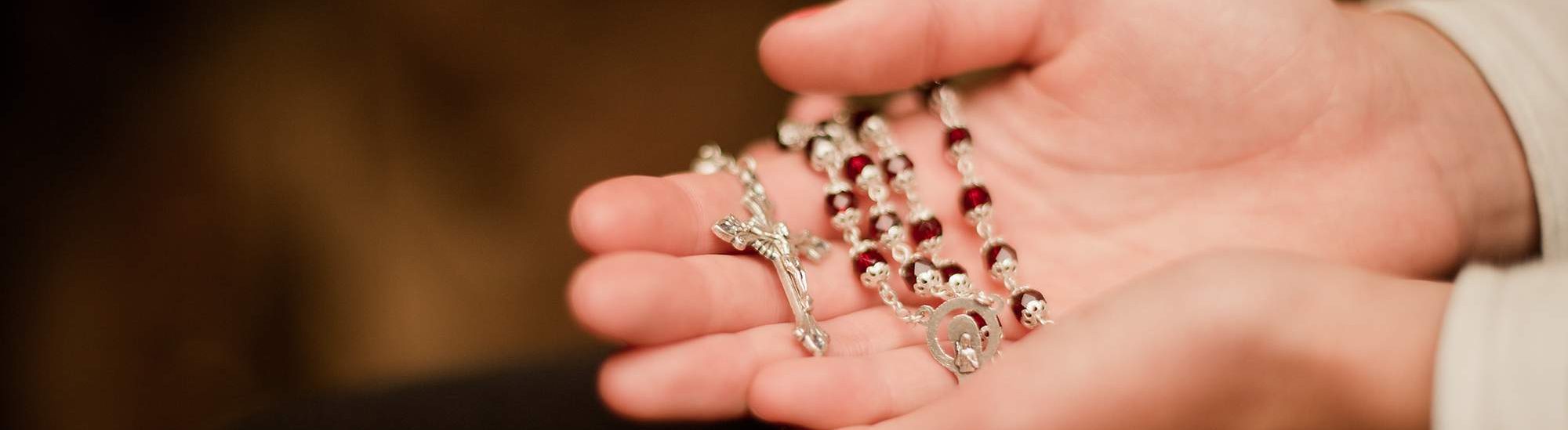
As we journey towards our Synod, we are looking for the fingerprints of God, but all the while the hand that made those fingerprints is holding us.
The Synod is not simply about what we are going to do for the Church. It is about discerning what Christ is already doing among us and allowing him to lead us.
There are two questions we might carry into this week and onto our Synod journey.
Where can I see the fingerprints of God?
And where do I need to let the Lord take me by the hand?
The hand that held Peter is the hand that blessed children, touched the sick and broke bread. It is the hand that would be nailed upon the Cross. It is the risen hand shown to the disciples as the sign that love is stronger than death.
The hands of the Lord Jesus are sure hands.
They are hands into which we can place our fears.
They are hands in which we can place the future of this Archdiocese.
When we feel out of our depth, when the wind is against us and the water seems to be rising, we need to keep our eyes, our focus, on Jesus.
His hand is already reaching out.
And his fingerprints are everywhere.
Most Rev. Anthony J. Ireland
Archbishop of Hobart
9 August 2026