CCEL Mass No. 2, 2026

Principals, educational leaders, teachers, and friends in Catholic education, it is good to be with you and Fr Sunil this morning at Mass. They asked me whether I wanted to speak to your gathering later this morning, and I said that like last time, my homily will be enough. So, buckle in!
You may recall the film: ‘The Emperor’s Club’. If you haven’t seen it – I can lend you the DVD. At the beginning, teacher Mr Hundert reflects on his life and vocation with these words:
“For most of us our stories can be written long before we die. There are exceptions among the great men of history, but they are rare, and I am not one of them. I am a teacher—simply that.”
There is something profoundly moving in that line: “I am a teacher — simply that.”
And yet, there is nothing simple about being in education.
To teach or to be a principal is to stand daily at the meeting point of faith and humanity, hope and struggle, grace and freedom. It is to work quietly where eternity touches ordinary life. It is to shape souls while correcting homework, attending meetings, calming anxieties, balancing budgets, comforting families, and holding together communities that are often more fragile than they appear or we care to acknowledge.
This morning, the readings of Thursday in the nineth week by sheer grace or serendipity speak directly into the heart of Catholic education.
Saint Paul says to his protégé Timothy: “Remember the Good News that I carry.” And then later: “Do all you can to present yourself in front of God as a worker who deserves no disgrace.”
Paul’s words are practical, earthy, and deeply encouraging. The Gospel is not an abstraction. It is carried by people. It is handed on through memory, witness, sacrifice, fidelity, and love.
This is the mission of Catholic schools. We exist not merely to produce successful students who have good NAPLAN scores, nor to produce architecturally awarding buildings.
Important though all these things are, we are not simply an alternative to Government schools, the deepest responsibility of Catholic education is to carry the Good News from one generation to the next.
And we do this at a remarkable moment in history.
Many of the children and young people entrusted to our Tasmanian Catholic schools are growing up in a culture that has become spiritually uncertain. Some families carry little memory of prayer. Some parents themselves were never well formed in faith. Increasingly, schools are now the first place where children hear the name of Jesus spoken with reverence and affection.
That is not a burden to fear. It is a moment of grace.
The Gospel we have heard today asks: “Which commandment is the first of all?” And Jesus replies with magnificent simplicity:
“You must love the Lord your God with all your heart, with all your soul, with all your mind and with all your strength… You must love your neighbour as yourself.”
This is the heart of Catholic education.
We educate the mind, certainly. But we also awaken the soul. We help young people discover that they are loved by God and called to love in return. We teach them that faith is not a relic from the past but a living encounter with Christ who walks beside them every day—in their joys, their wounds, their confusion, and their hope.
And because this mission matters so deeply, we cannot be content with a merely cultural Catholicism.
Our schools must become places where faith is intentionally proposed, joyfully celebrated, and courageously lived.
That is why I want to encourage something very strongly today.
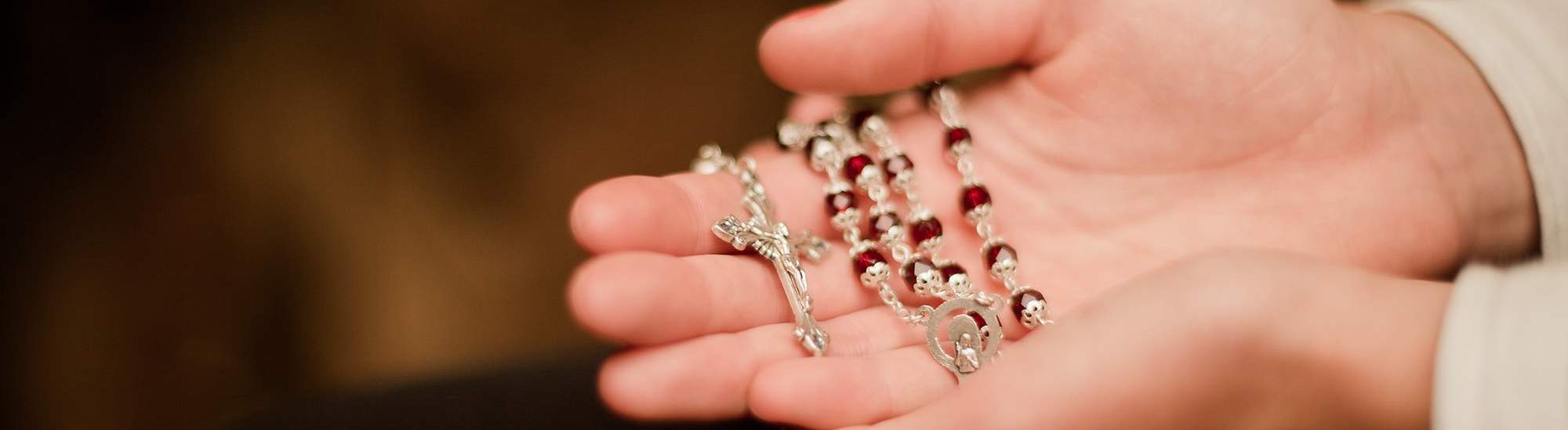
In our primary schools, where we promote programs for First Communion and Confirmation, there also should be thoughtful, beautiful, and welcoming baptismal preparation programs for families whose children are not yet baptised. Many parents are searching, even if they do not yet know how to articulate it. Schools are often the bridge through which grace reaches a family again. In the last parish where I was a parish priest, each year, I baptised many school children and their parents who requested to be received into the Catholic faith.
And in our secondary colleges, I would dearly love to see strong RCIC programs—the Rite of Christian Initiation for Children—so that adolescents who seek Christ may be accompanied with intelligence, reverence, patience, and warmth into the life of the Church. As an example, over the last ten years, Salesian College Chadstone, had at least twenty boys presented for baptism, confirmation and first communion each year. Whitefriars and Mazenod are now following in Salesian’s footprints.
What an extraordinary thing it would be if our Catholic schools became places where young people asked to receive the sacraments, where families rediscovered prayer, and where faith was not hidden away but lived with confidence and joy.
The fire of faith and the waters of baptism belong together. Our task is not to preserve ashes but to hand on living flame.
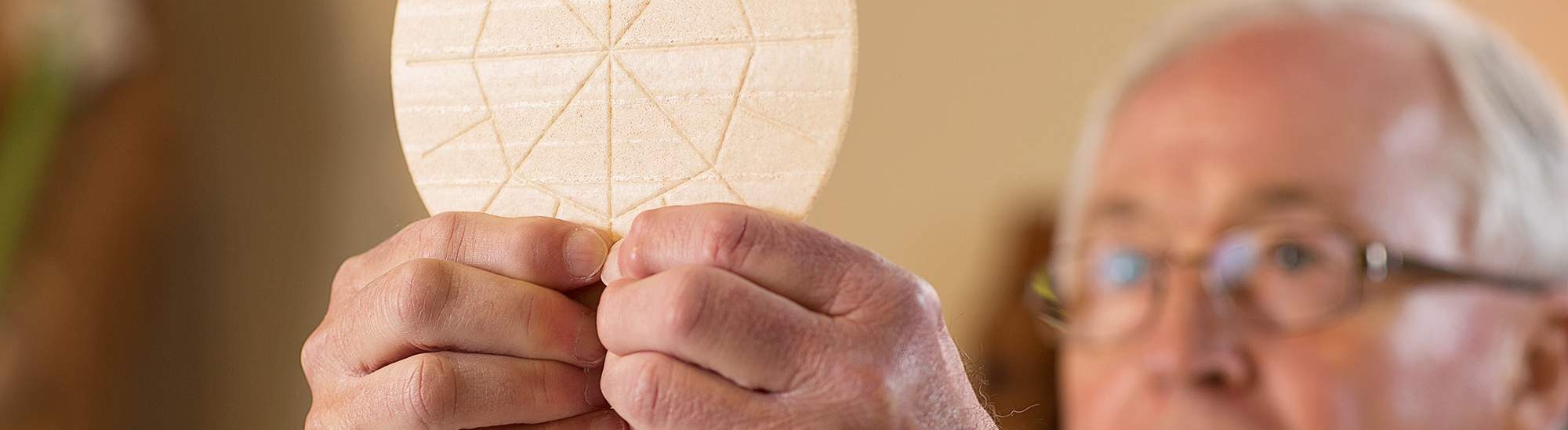
Pope Leo XIV writes in paragraph 234 of his recent encyclical Magnifica Humanitas that “the spirituality that we need is a Eucharistic spirituality, that is, a spirituality of ecclesial unity in love.” He reminds us that in the Eucharist the Lord not only gives himself to us but gathers the Church together, so that his self-offering becomes “the principle of unity and source of new life.” That insight lies at the heart of Catholic education. Our schools are not simply institutions for the transfer of knowledge. They are communities gathered around Christ, places where young people learn that faith is communion, that grace binds us together, and that every human person is called into the life of the Body of Christ.
This is why the sacramental and evangelising mission of our schools matters so much. When a child is baptised, when an adolescent enters an RCIC programme, when a young person discovers prayer, the Scriptures, the Eucharist, or the mercy of God for the first time, the Church herself is being renewed. As Saint Augustine told the newly baptised: “Be then a member of the Body of Christ that your Amen may be true!” Our task in Catholic education is to help young people say that “Amen” with their minds, their hearts, and their lives.
Sometimes we imagine that holiness belongs only to saints in stained-glass windows. But holiness often looks much more ordinary: a principal greeting students at the gate on a cold Tasmanian morning; a teacher coaching a struggling child; a leader making a difficult decision with integrity; a staff member refusing cynicism and choosing hope instead.
Every day God walks through our schools in such moments.
The songs we sing today remind us that the Christian life is shaped by both fire and water: the fire of the Holy Spirit and the waters of baptism; the daily grace by which God nourishes and sustains us; and the call to keep walking forward even when the road ahead is unclear. Catholic educators know this deeply. You walk by faith, often planting seeds whose flowering you may never see.
And so today I want to thank you.
Thank you for building communities where compassion is stronger than indifference, where truth matters, where mercy is possible, and where Christ may still be encountered.
At the end of ‘The Emperor’s Club’, the character Deepak Mehta says this of a teacher which can be applied to principals and those in the Catholic Education Office:
“A great teacher has little external history to record. Their life goes over into other lives. They are the pillars in the intimate structure of our schools. They are more essential than its stones or beams, and they will continue to be a kindling force and a revealing power in our lives.”
That is true of every authentic Catholic educator.
Your work flows over into other lives.
Long after timetables are forgotten, buildings renovated, policies rewritten, and reports archived, the love, faith, wisdom, courage, and hope you have planted in young hearts will continue to live.
Most Rev. Anthony J. Ireland
Archbishop of Hobart
4 June 2026.