
Polish community gather for Święconka tradition on Holy Saturday

By Josh Low
Amid the busyness of Holy Week and the preparation for Easter, a unique tradition was celebrated by the Polish community in Moonah on Holy Saturday.
Held at the Church of St Therese of Lisieux, the event – known as Święconka, meaning “the blessing of the Easter baskets”, saw baskets of food taken to church by the faithful to be blessed.
This centuries old Polish Easter tradition is held every year on Holy Saturday, with the blessed food then eaten the next day on Easter Sunday.
Beginning with the praying of the Divine Mercy Chaplet at midday, Polish community Chaplain Fr Jozef Migacz then spoke of the significance of Lent, Holy Week, the Triduum and the preparation for Easter.

He then blessed the food which the faithful left at the foot of the sanctuary in baskets.
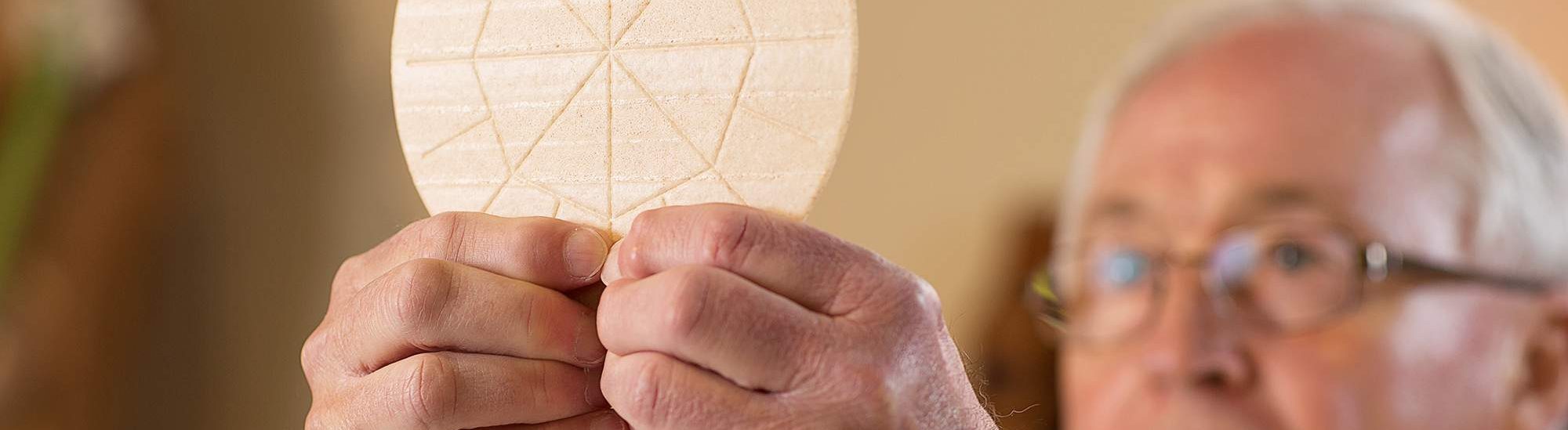
The Blessed Sacrament was also placed in a monstrance, covered by a veil, and stationed near the sanctuary to symbolise Christ’s covered body in the tomb; also a Polish custom.
“Święconka is a very old Polish tradition every year on Holy Saturday blessing the food that will be used at breakfast on Easter Sunday,” Fr Jozef explained.
Imparting the blessing on the Easter baskets, Fr Jozef prayed that all who partook in the Easter meal may enjoy the eternal feast in the Father’s house.

“Lord Jesus, the day before your passion and death, you sent the apostles to prepare the Passover and, on the day of your resurrection, you sat at table with your disciples.
“We ask you to let us live your presence in faith during Easter Sunday breakfast in our homes,” he prayed.
Sr Monika Bury MSChR, of the Missionary Sisters of Christ the King, said the tradition has been celebrated by Poles for hundreds of years.

Easter baskets can also contain any food the faithful wish to have blessed, but the usual items all hold symbolic meaning.
“At Święconka, this food is blessed as a sign of appreciation for God’s blessing.
“The baskets are usually filled with some bread, butter, some meat like sausages or ham, radish, eggs, salt and an Easter Lamb (figurine),” she said.
“The bread symbolises Jesus Christ, eggs symbolise new life and His Resurrection, horseradish for the bitter sacrifice of Christ, salt for purification, ham or sausage as a symbol of great joy and abundance and a white lamb figure bearing a cross-emblazoned flag, the typical Polish Easter symbol representing Christ Resurrected.”
