
Family as ‘Domestic Church’

Marriage Sunday 2020
This annual Mass is a celebration of God’s good plan for marriage and family life. Today we honour those couples who are celebrating significant milestones in their life together. We congratulate them and rejoice with them in the fruitfulness of their love for each other. We thank God for the many ways in which his grace and favour has helped and guided these couples in the years of their marriage.
In the documents of the Second Vatican Council, the family was described as the ‘Domestic Church’ (see LG 11). It may seem an unusual way of viewing the nature of marriage and the family. We associate the idea of ‘church’ with a building, or those professing the Catholic faith. We don’t immediately envision the family as a church.
Why would the Council Fathers propose this way of seeing the family? The idea actually reveals something quite profound about the nature of marriage and family.
At the natural level marriage is a covenant, a bond or union, between one man and one woman. They pledge themselves to an exclusive relationship for the whole of their lives. By its very nature, the marriage covenant is for the wellbeing of the spouses and for the procreation and education of children. This is the natural meaning of marriage. We understand as well that marriage and family is the normal expression of human life.
When a Catholic couple seek to be married they approach the priest and celebrate their marriage in a church. Thus, the marriage covenant is raised to the dignity of a sacrament. The couple’s commitment to each other and their new life as husband and wife is graced by God and marriage is the context in which the couple live out their Christian discipleship. They have intentionally invited God into their relationship and their future. They have asked God to accompany them in their life together.
They now see that their life together involves not each of them but they desire that God shares intimately in all that happens to them. God is integral to their marriage and subsequent family.
In another document of Vatican II, entitled Gaudium et Spes, the Council Fathers taught that “authentic married love is caught up into divine love and is governed and enriched by Christ’s redeeming power and the saving activity of the Church, so that this love may lead the spouses to God with powerful effect and may aid and strengthen them in the sublime office of being a father or a mother” (48). This is a rather beautiful way of seeing marriage and its link to God’s love and redeeming work. Simply put we can say that a couple become caught up in God’s love.
Of course, the key here is that a couple are conscious of the presence of God in their marriage and in their family life. Thus one important element of the family being a domestic church is that their faith is a lived reality daily within the home.
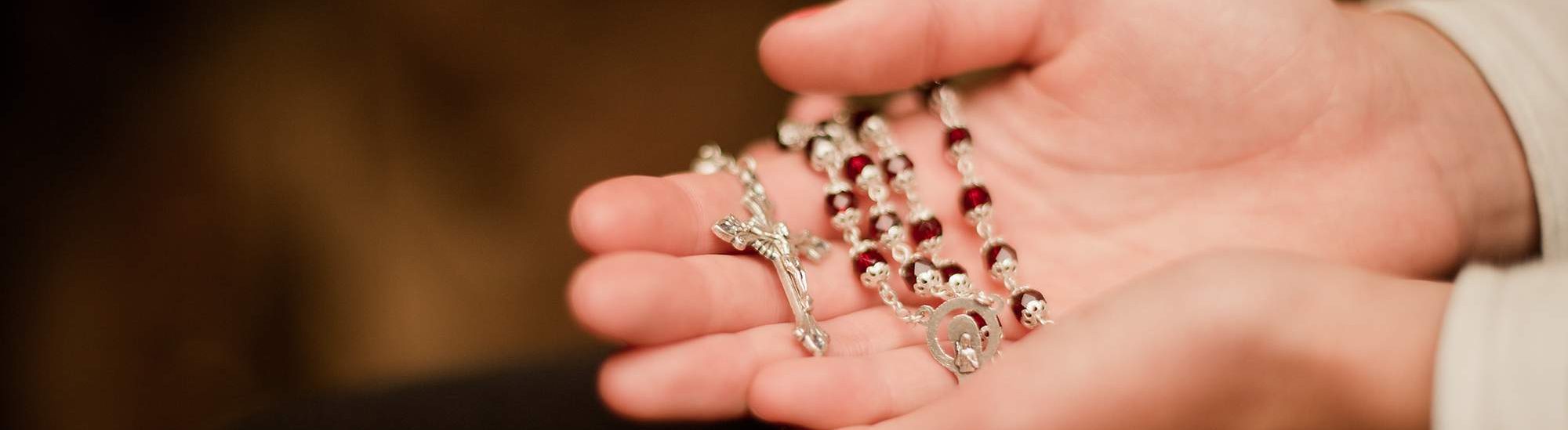
For example, when prayer is a feature of the life of the family, God’s presence is acknowledged and His saving grace is called upon. Pope St John Paul II commented, “It is prayer offered in common, husband and wife together, parents and children together” (FC 59). When husbands and wives pray together they together sanctify one another and their home. Such prayer confirms the faith of the other and in praying together parents express their spiritual concern for their children.
While spouses may pray in private, it is good when their prayer is known to their children. When the children can say, “Mum and Dad pray together,” such knowledge not only provides children with good example, but assures them of their parents’ love for one another and their love for them. Such an assurance enhances their trust that they live in an environment of love and safety, and so deepens their own sense of wellbeing.
Pope St John Paul II states: “Family prayer has for its very object family life itself” (FC, 59). Family prayer has as its primary purpose the up-building, the making holy of the entire family – parents and children together. He beautifully declares: “Only by praying together with their children can a father and mother … penetrate the innermost depths of the children’s hearts and leave an impression that the future events in their lives will not be able to efface” (FC 61).
The saintly
Pope says that this family prayer should include the family’s joys and sorrows,
hopes and disappointments, birthdays, weddings, deaths, etc. – the entire life
of the family. (see FC, 59).
Also it is worthy to note that Christian parents have the privilege to pray
over their own children, in giving their parental blessing, or in times of sickness.
Such prayer can be simple but personal.
Parents are the
first to teach their children to pray from the earliest age. Parents thus lead
their children into a knowledge of the love of God for them. The Christian
parent teaches children essential Christian prayers like the Our Father, the
Hail Mary, the Glory Be, the Act of Contrition, the Rosary, and other Catholic prayers.
These can be done within the context of morning and night prayer (see FC,
60-61). Pope Francis is of the same mind.
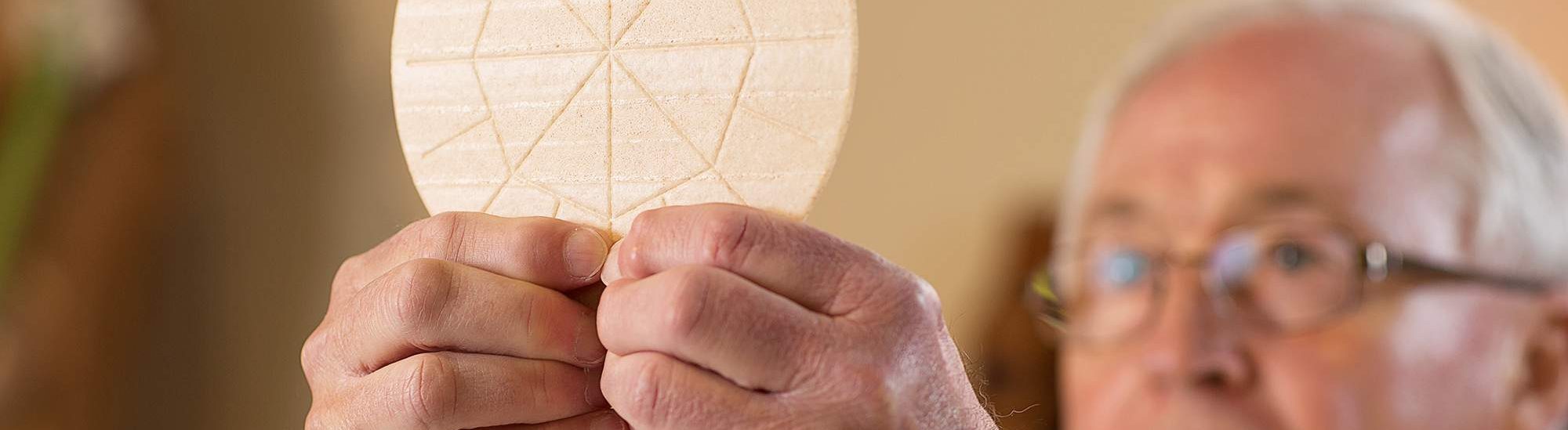
The culmination of family prayer is found in the Eucharist. In Amoris
Laetitia Pope Francis states:
“The family’s communal journey of prayer culminates by sharing together in the
Eucharist, especially in the context of the Sunday rest… For the food of the Eucharist
offers the spouses the strength and incentive needed to live the marriage
covenant each day as a ‘domestic church’” (318).As we honour these couples today who celebrate
significant milestones in their life together we have considered a simple and
yet profound notion: the family is a ‘domestic church’. Prayer within the
family gives testimony to this truth and ensures that the grace of the
Sacrament of Matrimony is experienced in daily life.
Archbishop Julian Porteous
Sunday 16 February 2020