Holy Thursday 2026

Welcome to everyone who has gathered in St Mary’s Cathedral for this first and most intimate movement of the Sacred Triduum. Welcome to those joining us online.
The Mass of the Lord’s Supper is not a re-enactment. We are not here to stage a memory. We are here to enter a mystery.
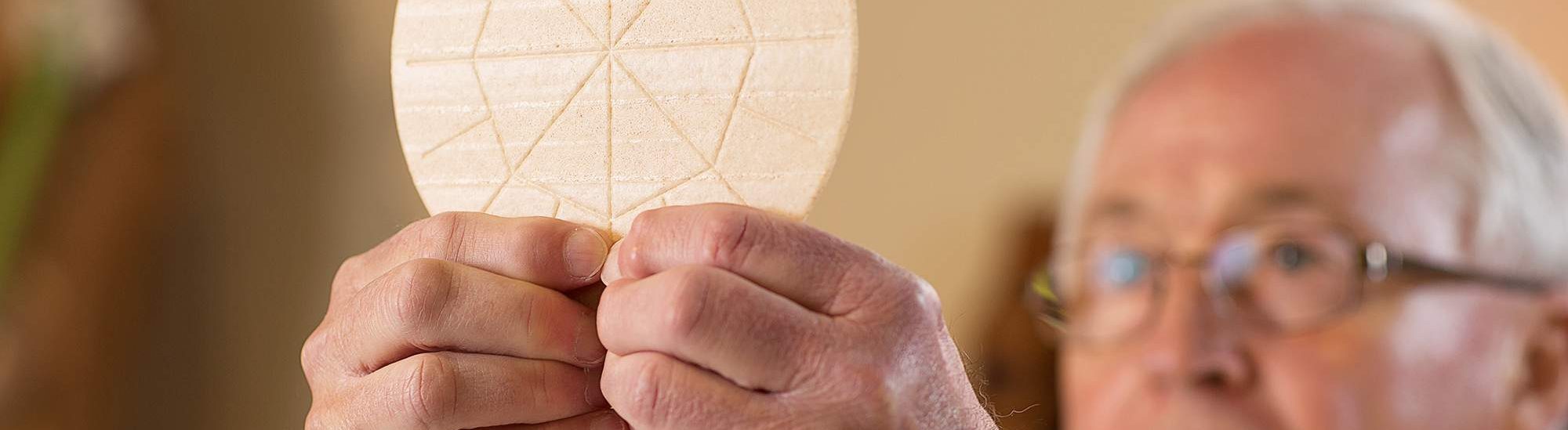
On this holy night, on the eve of Good Friday, we gather because we know that the Cross and the Eucharist cannot be separated. What was offered once on Calvary is given to us again—living, real, and saving—in the Eucharist. The sacrifice of the Cross is not repeated, it is made present. And we are drawn into it.
This is why we gather.
This is not symbolic language. This is the heart of our faith. Tonight, we stand at its source.
The Acts of the Apostles tells us that the earliest Christians devoted themselves to the prayers, to the hymns, and to the breaking of the bread. That breaking of the bread—the Eucharist—gave them their identity. And it gives us ours.
We can pray anywhere—and we should. But the Eucharist is different. It is here that we are gathered, not as isolated believers, but as the Body of Christ. Except for those prevented by age or illness, nothing replaces this. Because here, Christ gathers us, feeds us, and forms us into his people.
Every Sunday, we come because it is the day of the Resurrection. And when we receive his Body, we are drawn into that same risen life. When we say our “Amen” to “The Body of Christ,” we are saying something profound:
“Yes, I believe he is truly present.”
And also:
“Yes, I am part of his Body.”
Faith is never just “me and God.” It is always us—his Body, his Church—sent into the world.
And that leads us to what we will soon witness.
The washing of the feet is not an optional extra. It is not a gentle symbol. It is the Gospel in action.
The Lord of heaven kneels. The Master becomes the servant. He takes the dust, the sweat, the road-worn feet of his disciples into his hands—and washes them.
And then he says, “I have given you an example so that you may copy what I have done to you.”
Every Eucharist must lead to loving service and to Christ. If it does not, we have misunderstood it.
To receive the Body of Christ is to become the Body of Christ—broken for others, poured out for others, given in love.
And here, the Gospel becomes searching.
Because the Church has not always lived this well. There have been times when we have been more concerned with status than service, more attentive to ourselves than to the poor, more protective of our image than committed to the vulnerable.
Tonight, the Lord kneels before us again—and calls us back.
He calls every one of us, but especially those entrusted with leadership, to remember: authority in the Church is always service. The greater the responsibility, the deeper the call to humility.
If our celebration of the Eucharist does not lead us to love—real, costly, practical love—then it risks becoming an empty ritual… even a contradiction.
But when it is lived—when it takes flesh in our lives—it becomes something radiant.
Then we begin to wash feet in our own way: with patience for those who try us, through generosity to those in need, by quiet acts of kindness that no one else sees, and in standing with the poor, the overlooked, the wounded.
This is how the Eucharist continues in the world.
Tonight, as we hear again the command of the Lord—“Do this in memory of me”—we understand it more deeply. It is not only about what happens at the altar. It is about what happens in our lives.
Receive me, he says. Be changed by me. And then go—and be me for others.
Because our world still crucifies the weak. It still overlooks the vulnerable. It still thirsts—for goodness, for truth, for hope.
And we—fed by this Eucharist—are sent to be Christ’s healing presence in that world.
On this night of Passover, on the threshold of our redemption, may we be nourished by the Word and the Bread of Life.
And may we leave this place not only remembering what Jesus did— but ready to do as he has done: to love without counting the cost, to serve without seeking recognition, and to become, for others, a living sign of his presence.
Most Rev. Anthony J. Ireland
Archbishop of Hobart
2 April 2026